
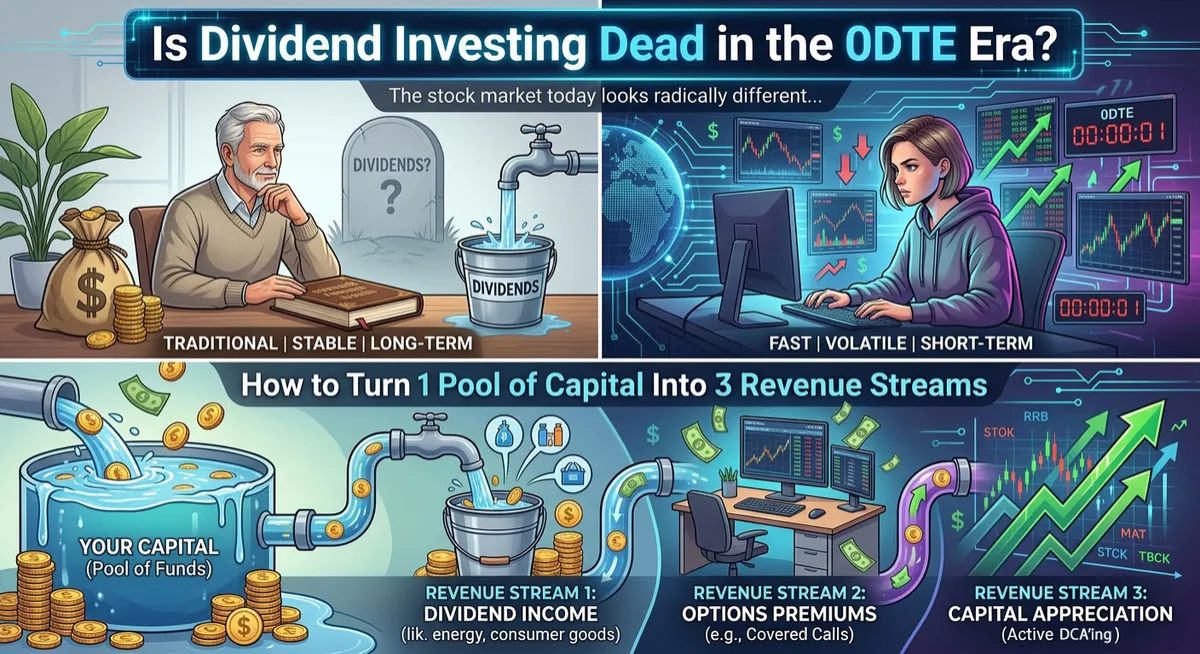
Is Dividend Investing Dead in the 0DTE Era? How to Turn 1 Pool of Capital Into 3 Revenue Stream
How to Turn 1 Pool of Capital Into 3 Revenue Streams
The stock market today looks radically different than it did just a few years ago—or even a few months ago.
We are living in a hyper-velocity financial landscape where legacy rules are being rewritten. The market has shifted dramatically with changes surrounding the Pattern Day Trader (PDT) rule, which historically capped traders with under 25,000 from executing more than three day trades a week.
At the same time, we’ve seen the explosion of 0DTE (ZeroDaystoExpiration) options and daily expiration dates across top mega-cap stocks like Microsoft (MSFT), Nvidia (NVDA),and Alphabet(GOOGL). Add a steady stream of new crypto products and new brokerage platforms popping up weekly, and it’s easy to feel like the financial system is moving faster than ever.
With all of this noise, speculation, and structural evolution happening at once, a crucial question arises for wealth builders: Is investing in dividend stocks still a feasible strategy?
Our answer at Mindshift Theory is an emphatic yes—but only if you upgrade your framework and execute with precision.
The Dividend Trap: Why Buy-and-Hold Is No Longer Enough
The traditional advice was simple: pick a dividend payer, set up DRIP (dividend reinvestment), and wait 30 years.
Here is the cold reality: if you blindly dollar-cost averaged (DCA) into a company like Ford ($F) over the last 30 years, you received dividend checks, but you effectively saw zero long-term capital appreciation in the stock price. Your purchasing power was eroded by inflation, and your opportunity cost was massive.
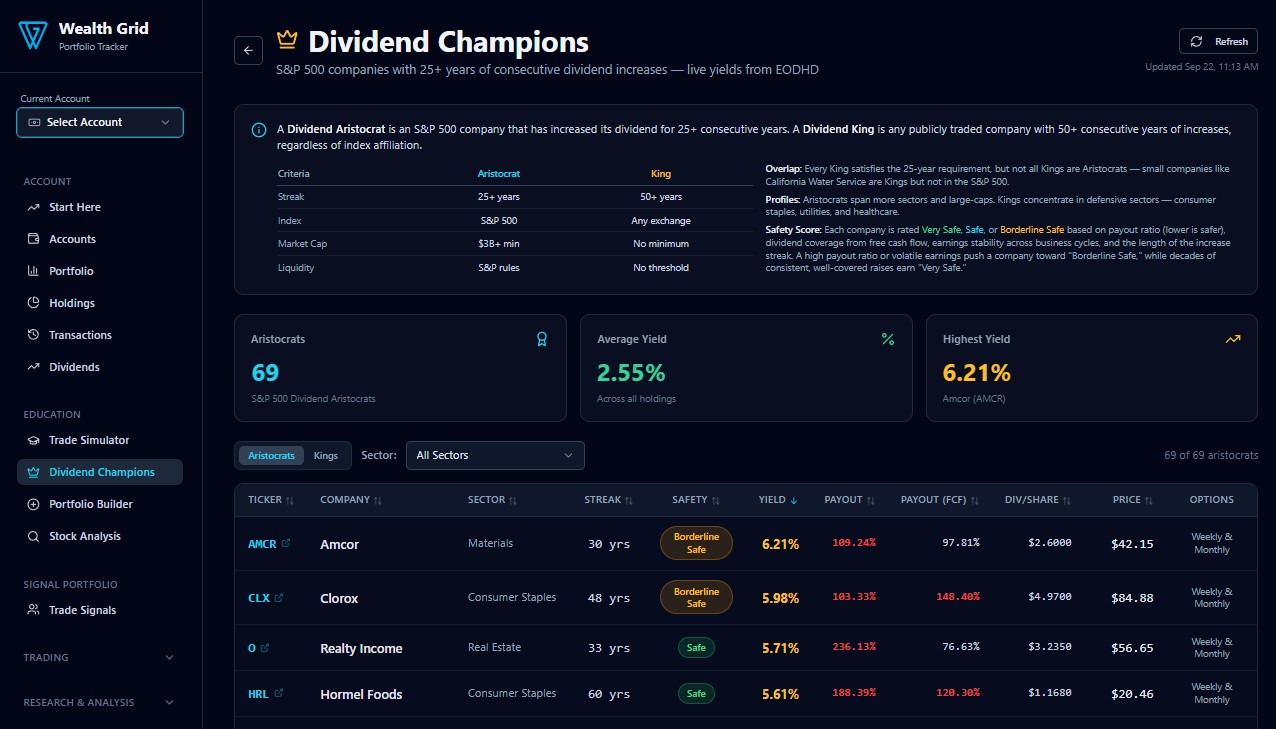
Yield alone does not equal wealth creation. That is why we evaluate dividend-paying companies through a strict safety matrix:
Very Safe: Strong cash flow, low payout ratios, structural moats, and proven long-term share price appreciation.
Safe: Predictable balance sheets and reliable income, but with moderate price growth potential.
Borderline Safe: Enticingly high yields that mask stagnant growth, high debt, or structural disruption risks (the classic dividend traps).
To build real wealth today, you must align your stock selection with both short-term cash flow and long-term capital expansion.
The Wealth Triangle Strategy: 1 Pool of Capital, 3 Revenue Streams
Instead of letting capital sit passively waiting for a quarterly payout, we utilize our signature Wealth Triangle Strategy. This financial model is designed to maximize the productivity of every dollar you deploy.
Rather than settling for a single outcome, the Wealth Triangle turns one pool of money into three distinct revenue streams:
By pairing safe dividend-paying stocks with systematic option strategies—essentially acting as a "stock market landlady"—you generate immediate short-term cash while maintaining ownership of underlying assets that compound for the long haul.
Screening for Success: Criteria That Matter
Because the Wealth Triangle relies on holding the underlying shares, we are aggressively selective about which dividend stocks qualify. A company must satisfy three strict non-negotiables before we recommend dollar-cost averaging into it:
Capital Growth Potential: The business must have clear tailwinds to drive share price appreciation, not just stagnate like legacy yield traps.
Payout Sustainability: The dividend must be comfortably covered by free cash flow and backed by a resilient balance sheet.
Option Liquidity & Volatility: The stock must feature active option chains with sufficient liquidity and premium to make covered call writing viable.
Elevate Your Portfolio Strategy
In a market dominated by daily option expirations and endless financial distractions, real financial clarity comes from systemizing your cash flow. You don't have to choose between safe income and aggressive growth—you can engineer both using the same capital.
We have put together a vetted list of dividend stocks that strictly meet the criteria for the Wealth Triangle Strategy.
You can access this asset list alongside our full portfolio breakdown inside our Wealth Grid portfolio management platform. As a member of the Wealth Circle, the Wealth Grid portfolio app is free.
How are you adapting your portfolio to today's market shifts? Are you leveraging covered calls on your dividend holdings, or relying solely on traditional DCA?
Let's discuss in the comments.