
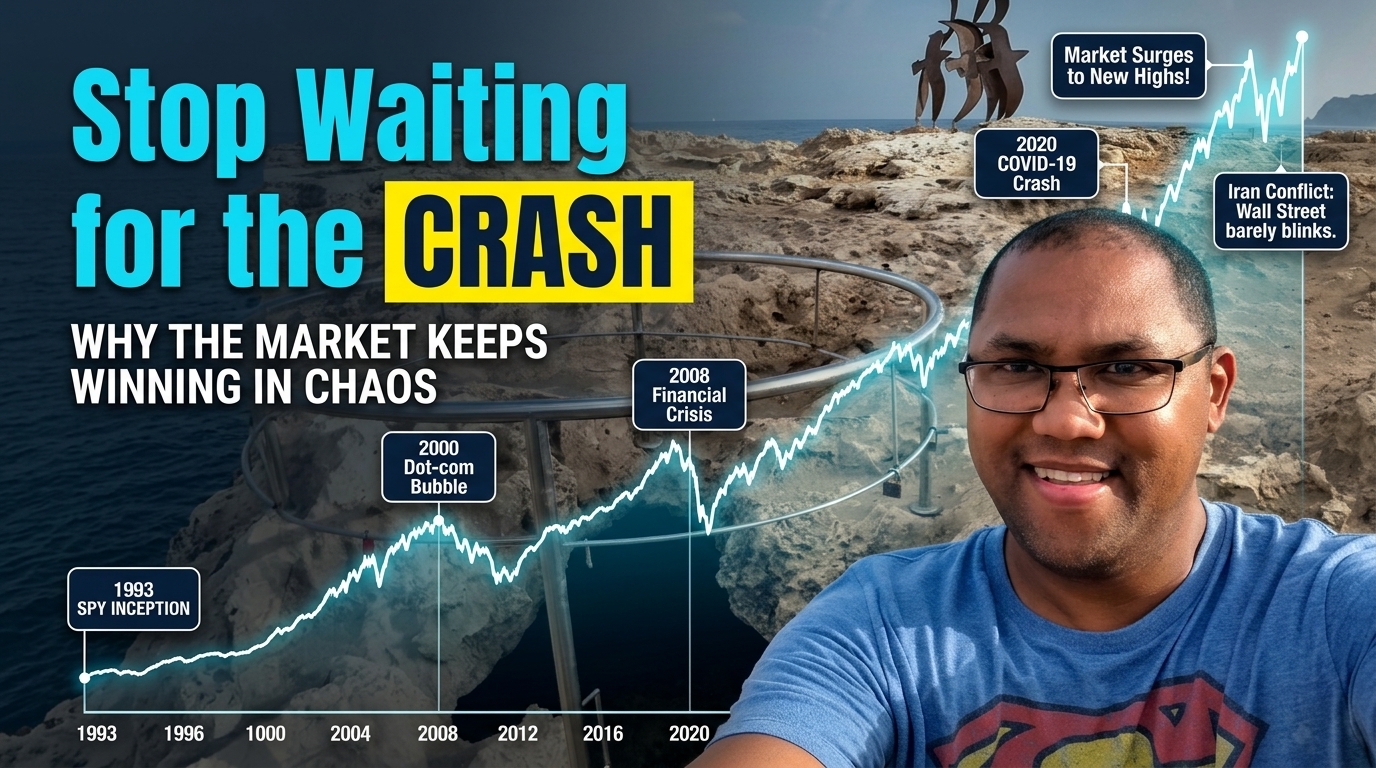
Stop Waiting for the Crash: Why the Market Keeps Winning in Chaos
Why Does the Stock Market Rise When the World Is Falling Apart?
Every time a global crisis erupts, doom-mongers tune in, ready to declare the death of capitalism. COVID-19 shuts down global supply chains? The S&P 500 surges to record highs. Geopolitical conflict breaks out in Iran in early 2026? Wall Street barely blinks. To the casual observer, equity markets look unhinged, morally detached, and fundamentally irrational.
The market isn't insane; public perception of it is.
The stock market is not a moral scorecard, nor is it a proxy for daily human misery. It is a cold, hyper-focused pricing mechanism for future corporate cash flows. When COVID hit, thousands of brick-and-mortar small businesses suffered, but the mega-cap tech, healthcare, and financial titans that dictate broad market index returns (like SPY and QQQ) saw revenues skyrocket.
In 2026, when conflict threatens energy markets, headlines panic over 1970s-style oil shocks—ignoring that today's global economy relies far less on crude oil and far more on the explosive revenue engine of the AI revolution.
Zoom out on a 30-year chart of the market. It is a graveyard of "unprecedented" crises:
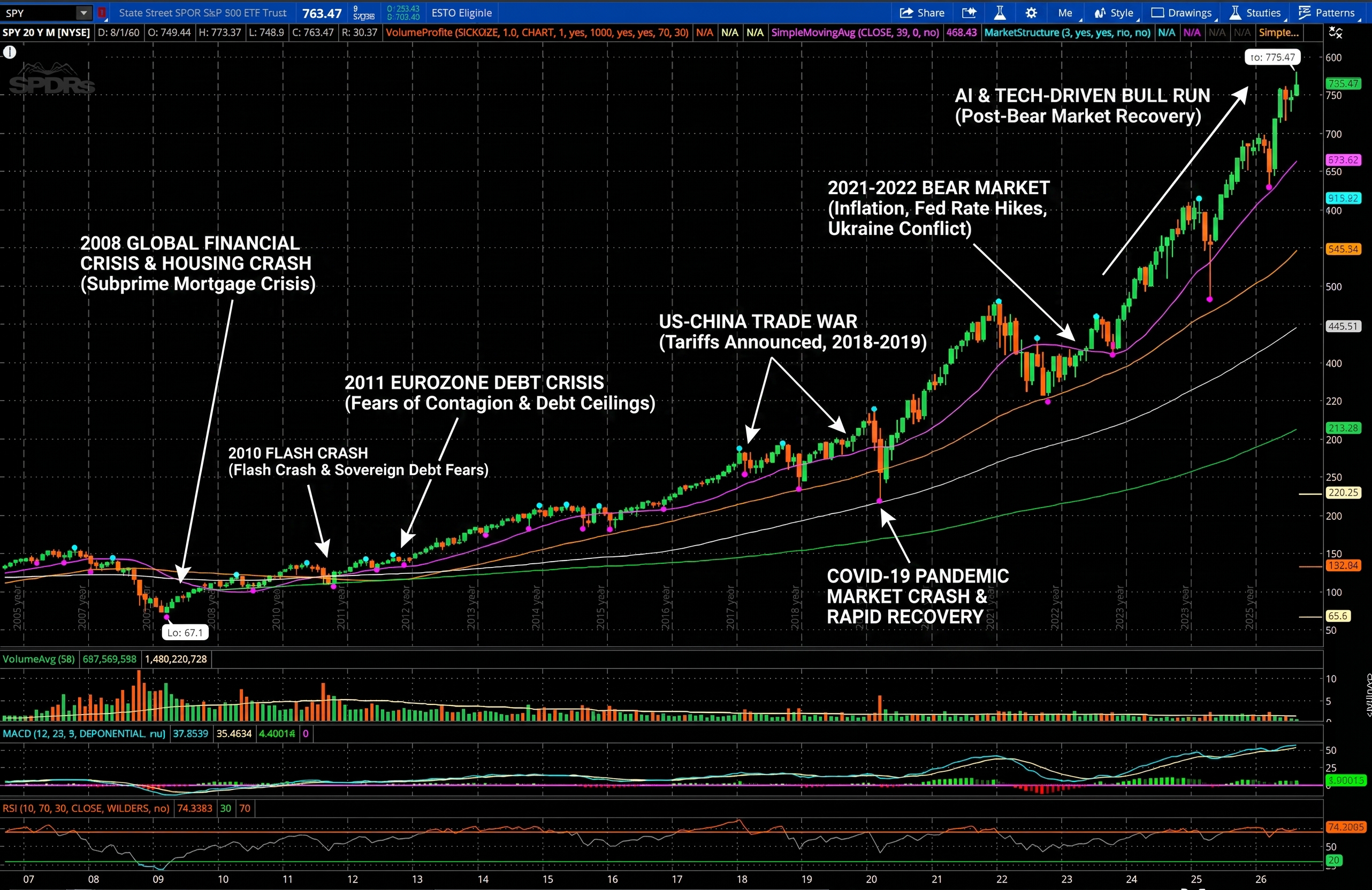
The 2008 Great Financial Crisis
The 2010 Flash Crash
The 2011 Eurozone debt crisis
The 2018 US-China trade wars
The 2022 post-pandemic inflation shock
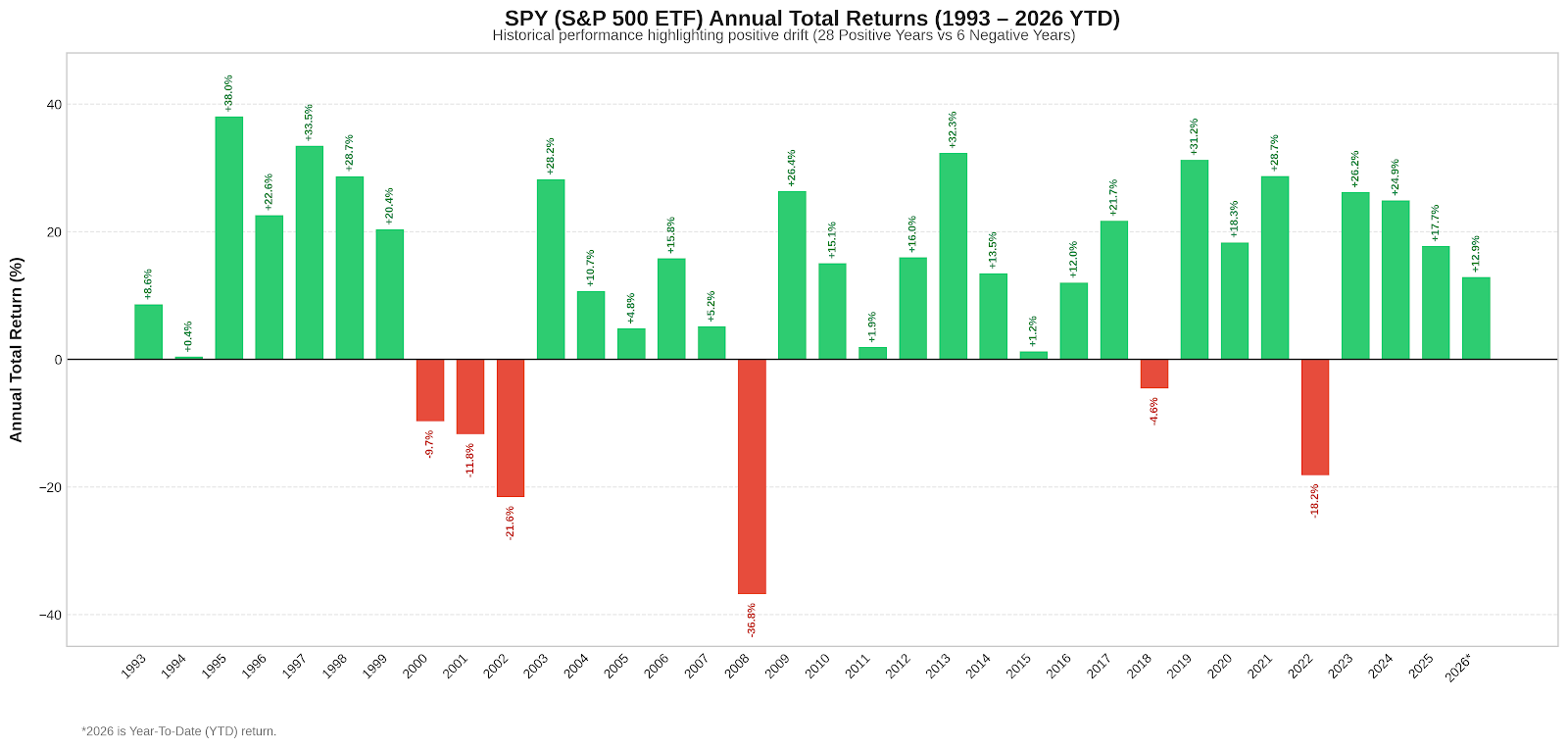
Every single one was sold as the end of the financial world. Yet, broad market indices continued their historic upward trajectory.
The market is a positive drift vehicle because human enterprise solves problems, adapts, and grows earnings over time. Relying solely on earned income while hoarding cash in a standard savings account is financial suicide—inflation steadily melts your purchasing power. Shifting capital into compounding assets—whether through index growth or high-yield dividend portfolios—is the only proven mechanism for building lasting net worth.
Could the AI boom turn out to be a temporary bubble? Sure. Could new shocks hit tomorrow? Absolutely. But just because equities don't panic at every breaking news notification doesn't mean the system is broken.
Ninety-nine percent of market headlines are pure noise designed to trade on your anxiety. The market isn't crazy for shrugging off the daily doom—it's just doing what it has done for over a century: compounding value for the few disciplined enough to ignore the noise and stay invested.
If you are keen to know how to take advantage of the stock market and become a profitable investors, then lets talk.