
The Under $100K Blue-Chip Cash Machine: Generating a 30% Yield
What if I told you that you could take three of the safest, most reliable blue-chip companies on earth, invest under $100,000, and generate a massive 30% annual income?
Most investors think blue-chip dividend stocks are boring—that you’re stuck scraping up a 1% or 3% yield while waiting years for growth. But if you know how to build your portfolio at the right time, and layer on the Wealth Triangle cash-flow strategy, you can turn a modest portfolio into a legitimate revenue-generating machine.
Today, we are looking at the exact blueprint of how a sub-$100k portfolio generates over $26,000 a year in sustainable revenue.
The Setup: Buying at Swing Lows To make this work, you have to time your entries to dollar cost average based on technical analysis. We aren’t buying at all-time highs; we are buying when these value companies are on sale.
Here is how we structured this portfolio:
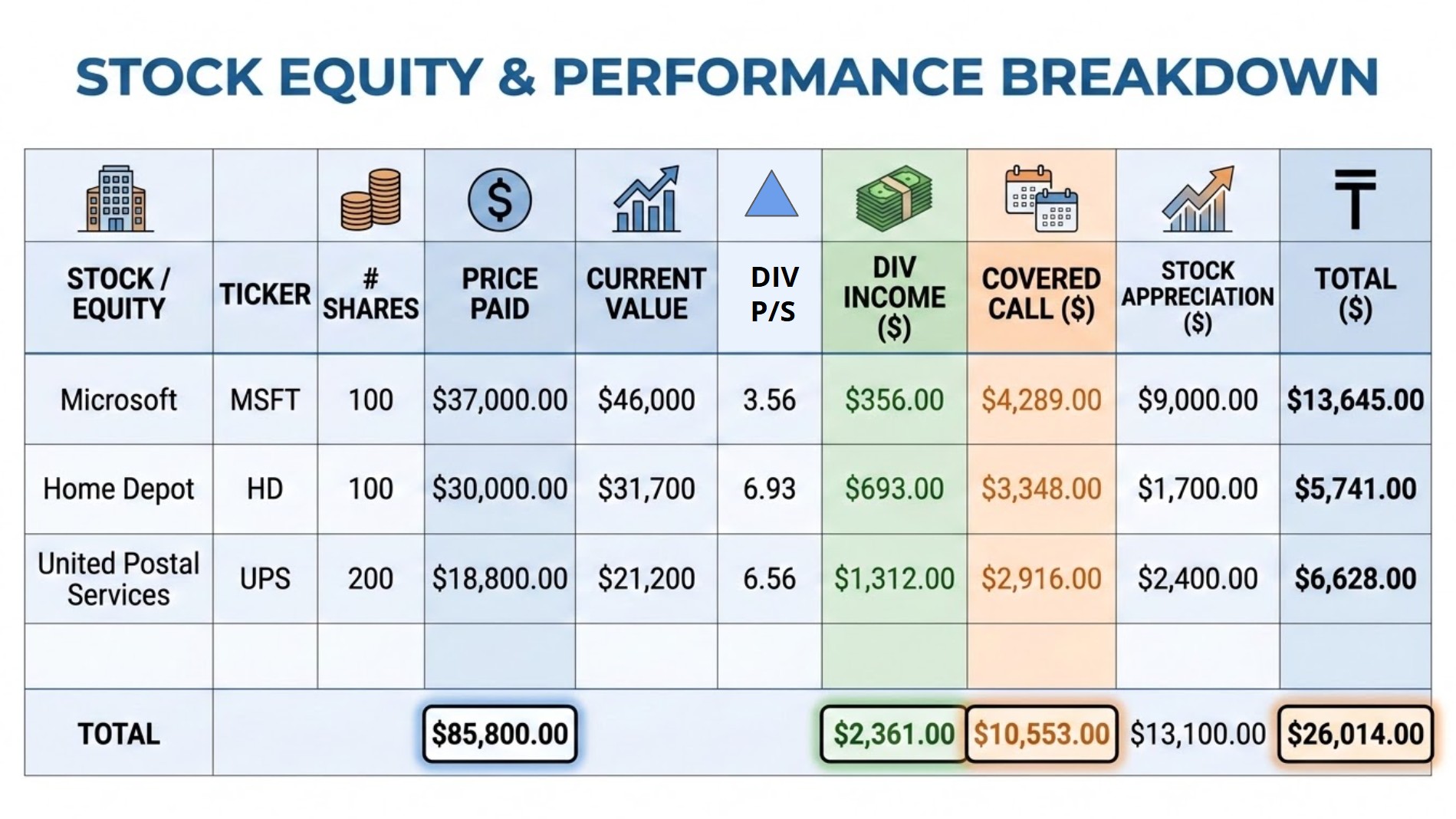
Microsoft (MSFT): 100 shares at the swing low of $370 (Total cost: $37,000).
Home Depot (HD): 100 shares at $300 (Total cost: $30,000).
UPS: 200 shares at $94 (Total cost: $18,800).
Total money out of pocket? $85,800. This keeps you safely under the $100,000 limit, leaving you with some extra cash on the sidelines.
Layer 1: The Pure Dividends Just by holding these shares, you become a part-owner of three massive cash cows. Here is what they pay you just to sit there:
MSFT: $3.56 a share, or $356 a year.
HD: $6.93 a share, or $693 a year.
UPS: $6.56 a share. Across our 200 shares, that is $1,312 a year.
Combined, your baseline annual dividend payout is $2,361, providing a starting dividend yield on cost of 2.75%.
Layer 2: The 2-Week Covered Call Strategy $2,361 a year is great, but we want to supercharge this portfolio. That brings us to part 2 of the Wealth Triangle Strategy: The 2-Week Covered Call Strategy. If you aren’t using covered calls on your long-term shares, you are leaving free money on the table.
To maximize cash flow, we are using a 2-week rolling strategy targeting a 20 Delta. A "20 Delta" means there is roughly an 80% statistical probability that the stock will stay below our strike price by expiration. We are selling safety to someone else for a premium, repeating this process 26 times a year.
Here is the extra juice this injects into our stocks:
MSFT: We collect roughly $1.65 per share, adding an extra $4,289 in pure cash over a year.
HD: We collect $1.29, adding $3,348 annually.
UPS: We collect $0.56 per share across our 200 shares, generating a staggering $2,916 a year.
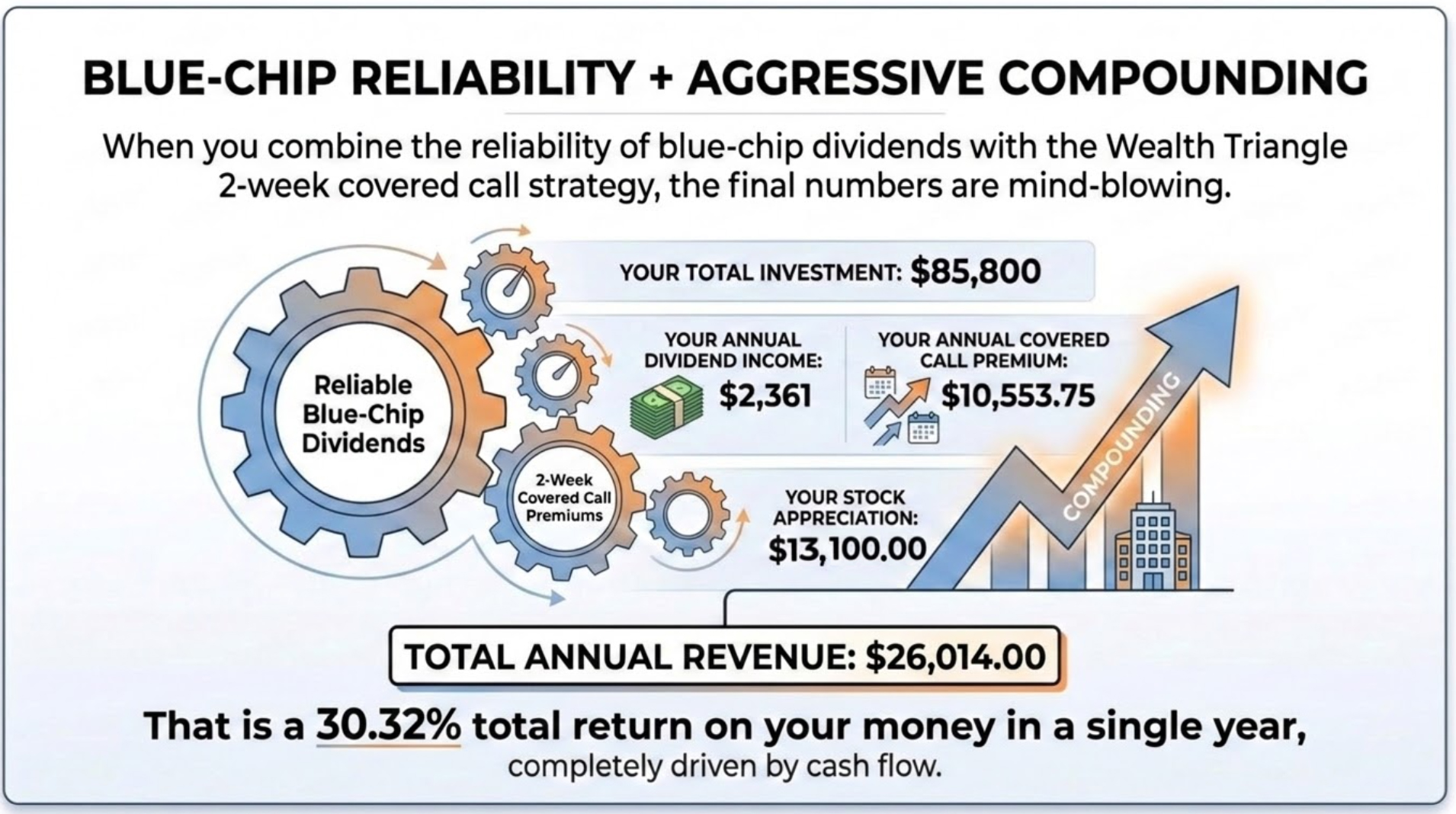
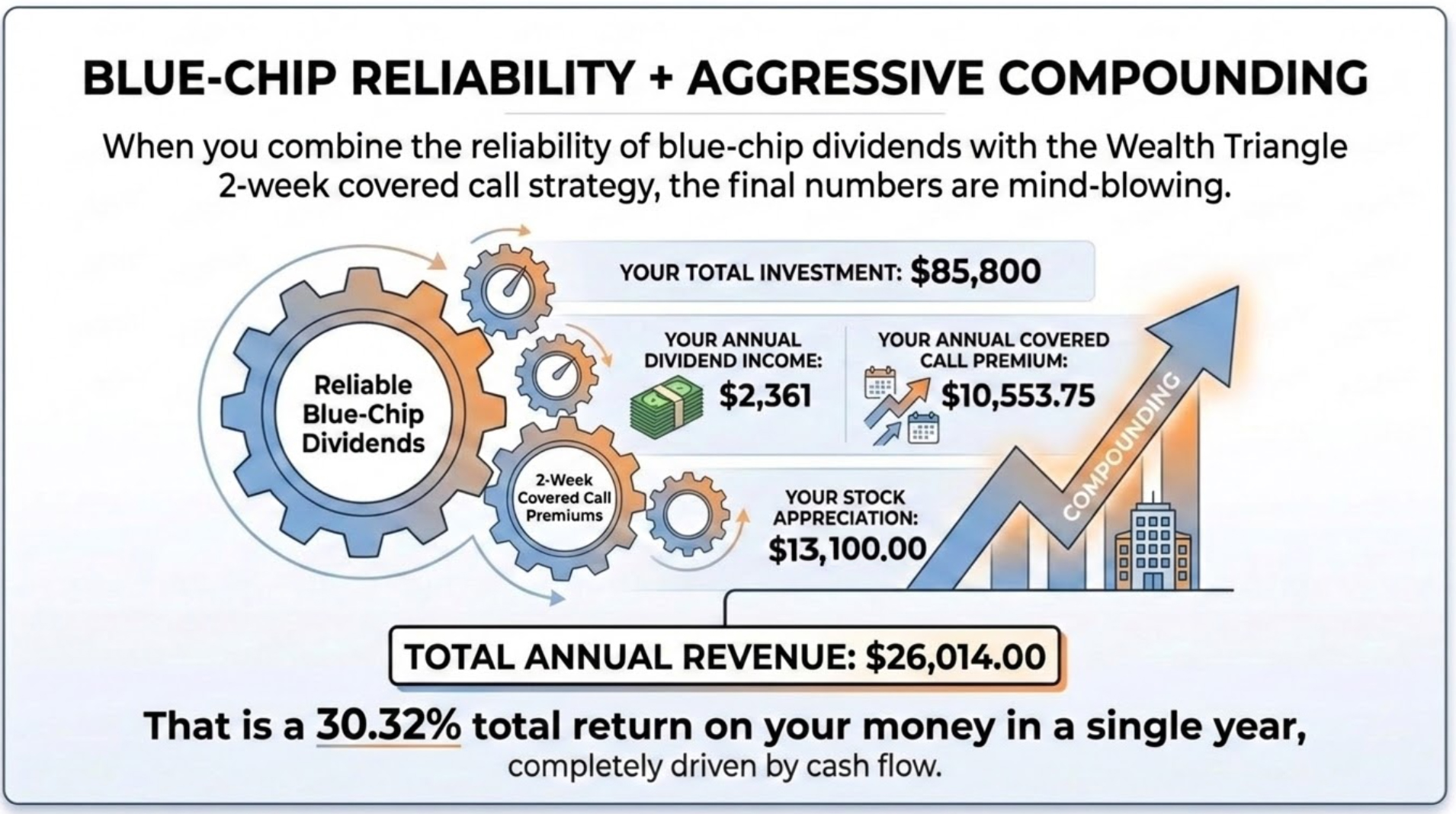
The Mind-Blowing Final Numbers When you combine the reliability of blue-chip dividends with the 2-week covered call strategy, the final numbers are massive:
Total Investment: $85,800
Annual Dividend Income: $2,361
Annual Covered Call Premium: $10,553.75
Stock Appreciation: $10,553.75
TOTAL ANNUAL REVENUE: $26,014.00
That is a 30.32% total return on your money in a single year, completely driven by cash flow.
What’s the catch? With a 2-week strategy, the strike prices are closer to the stock price. If Microsoft or UPS skyrockets past your strike, your shares might get called away, forcing you to sell at a profit and capping your upside.
Drop a comment below: Are you team "Pure Dividends" or are you supercharging your portfolio with covered calls?