
The Hidden Engine of the Stock Market: Why Sector Rotation Dictates Your Portfolio’s Success
Have you ever looked at your investment portfolio on a bloody market day and wondered why everything is down, despite your best efforts to diversify?
Many investors believe that holding a mix of ten or twenty different growth and dividend stocks means they are safe. But if all of those holdings sit within a single corner of the market—like technology—you aren’t diversified at all. When that sector takes a dive, your entire financial foundation goes down with it.
To build resilient wealth, you need to master the art and science of sector rotation.
The Power Players: Understanding S&P 500 Weightings
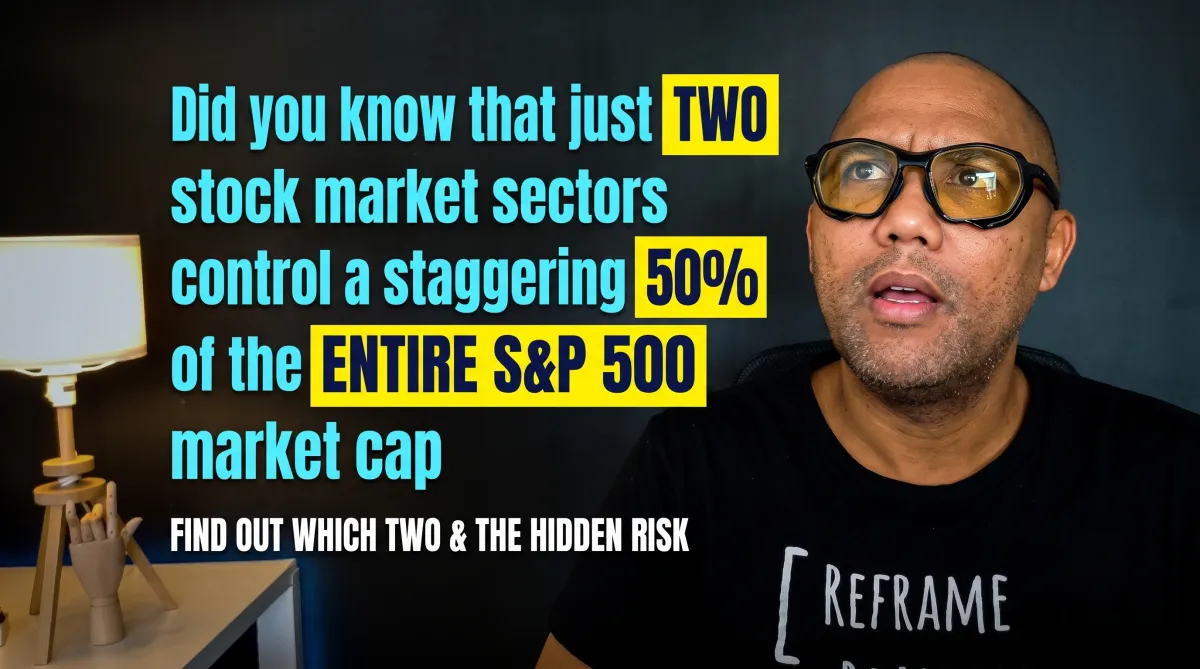
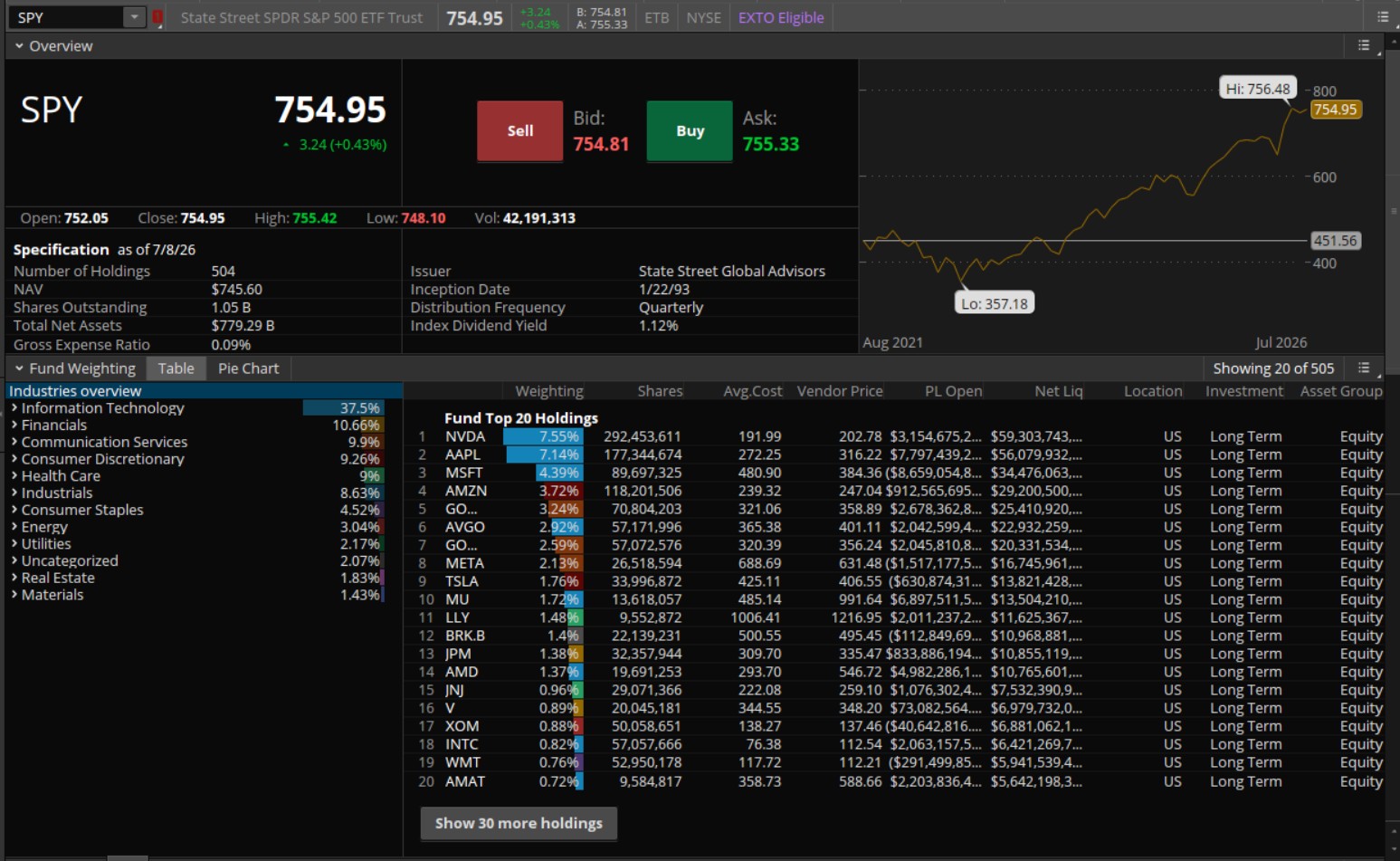
The S&P 500 (tracked by the SPY ticker) is not distributed evenly. It is split into distinct sectors, and two heavyweights practically run the entire index:
Information Technology (XLK): Makes up roughly 40% of the market cap.
Financials (XLF): Makes up roughly 10% of the market cap.
Combined, these two sectors account for 50% of the entire market. If Nvidia, Apple, Microsoft, or the major banking institutions take a hit, the broader market will drop almost instantly. Conversely, smaller sectors like Materials, Real Estate, and Utilities have a tiny impact on the broader index price, even if they experience large percentage moves.
Safe Havens vs. High Volatility
When economic uncertainty hits, smart money rotates out of speculative growth stocks and moves into "boring" but necessary sectors:
Consumer Staples (XLP): Companies like Walmart, Costco, and Coca-Cola. Everyone needs food and toothpaste regardless of inflation or high interest rates. This sector offers a safe, dividend-paying refuge during market turmoil.
Energy (XLE): Highly volatile and deeply impacted by global events (such as recent geopolitical tensions pushing oil to $110 per barrel). While its immediate market weighting is small, energy costs have a massive, lagging impact on transportation, food prices, and inflation.
The AI Trade and the Golden Rule for Retail Traders
Right now, the market is experiencing intense sideways consolidation around the AI trade. While Industrials (XLI) like Caterpillar are thriving by building out the physical infrastructure for AI, Semiconductor and memory sectors (SMH) are experiencing heavy volatility as investors question future earnings profitability.
As retail investors, how do we navigate this?
The Golden Rule: Always follow the money. When institutional investors step up with significant volume, that is your cue to participate. Never allow yourself to become the exit liquidity for big players moving out of a sector.
By tracking weekly sector rotations, you gain a massive advantage. You will know exactly when to aggressively deploy capital via dollar cost averaging, and exactly when it is time to take profits off the table and keep your powder dry.